Several of Jaguar's most important models have had a strong impact on the carmaker's image. These vehicles from the beautiful XK120 to the legendary E-Type and refined XJ, had bold design, powerful performance and luxury. Some even made the racing circuit famous and others revolutionized the world of Jaguar road cars.
The company became popular with models that were distinguished by their styling, speed and comfort. Let's take a look at Jaguar's six notable models that have significantly shaped the brand and influenced the automotive industry.
The Jaguar Models That Changed the Brand's History
Discover the iconic Jaguar models that transformed the brand's history through bold design, powerful performance and luxury.From the XK120 to the legendary E-Type and XJ, these cars helped define Jaguar's global identity.
Jaguar XK120 (1948)
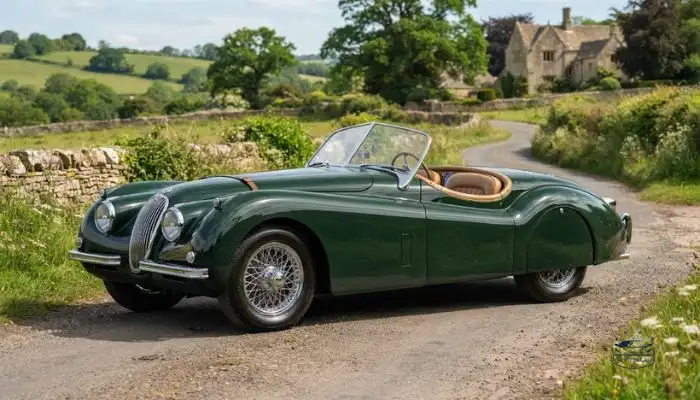
The name Jaguar actually emerged before the Second World War, and the SS100 sported certainly set the tone for the company's sporting aspirations. But William Lyons' XK 120 is what really made the company. The most exciting thing at the 1948 London Motor Show, the XK 120 arrived with a brand new six-cylinder engine and styling that put the best of Italy and France to shame.
When it came to performance, the XK 120 became a byword for top speed when most family cars struggled to get anywhere near 70mph. As the backbone of the postwar Jaguar range, the XK 120 and its later derivatives made the name as desirable as Aston Martin or Ferrari, and racing achievements rounded off the achievement.
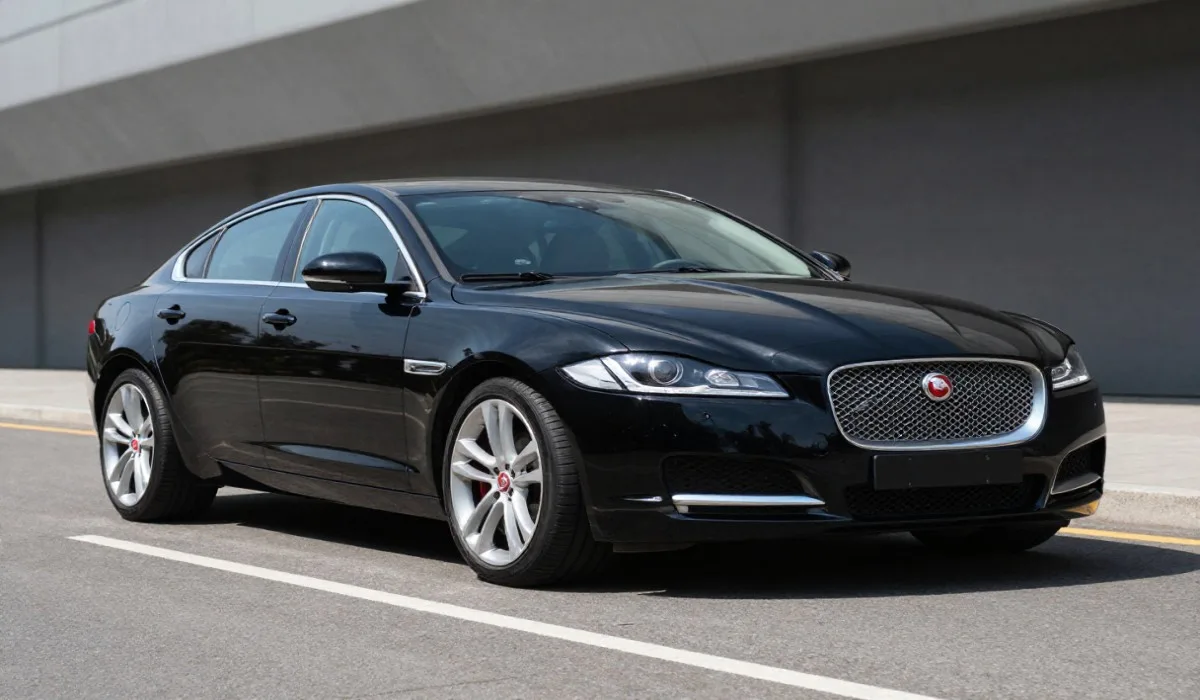
Read More: Jaguar XF Sedan Tech Features Explained
Jaguar MkV (1949)
Usually overshadowed by other models of its short production life (1949-1951) and all the better for it, the MkV served as a milestone model for Jaguar, allowing it to compete alongside the likes of Bentley in the luxury saloon market. It might not have been quite as opulent, but it was considerably more accessible in price.
It had pre-war engines but it still set the pace, especially the 3-Litre while the style tone subtly modernized it with its integrated headlights. Crucially, the V's chassis also formed the basis for the big Jaguar saloons, up to the date when the MkIX ended production in 1961.
Jaguar C-Type (1951)
During peacetime, Jaguar's sporting reputation primarily confined itself to domestic competition, but that was not the case with the 1951 C-types. Engineers developed it specifically for the Le Mans 24 hours, and it emerged victorious; that success was no flash in the pan.
The C-type dominated sports car racing around the globe, even though only 54 examples were made. Fitted with a race-bred 3.4 litre straight six engines, the C-type won another trophy at Le Mans in 1953 and helped propel Jaguar to further victories, with the E-type following.
Developers increased performance when the C-type eventually got outclassed by the development of the D-type, a svelte new monocoque racecar that became a rival to the Mercedes-Benz W125, and they released the XKSS in light consumer goods, which laid the foundations for the E-type. A total of 10 units went to the US to boost the marque's strength before they increased the number of overall wins to five in the 50s.
Jaguar MKII (1959)
Could there be another car with so many film and TV appearances as the Jaguar MkII? In period, and later in the 1970s, filmmakers used it as the everyday car for villains and police cars in front of the cameras. But even now the MKII is basically a short-hand in the car world for a 'naughty' car.
All those on-screen and off-screen appearances boosted Jaguar into the aggregate consciousness of motoring buyers with the speed, handling, style and stylish interior of the MkII. Just as importantly, the MkII allowed Jaguar to extend its sales base from the luxury market to the middle market and brought in vast sums of money as the company sold 83,980 MKIIs, as well as 7242 of the pared-back 240/340 models. That made the MkII the company's best-selling Jaguar up to that point, by a long way.
Jaguar E-type (1961)
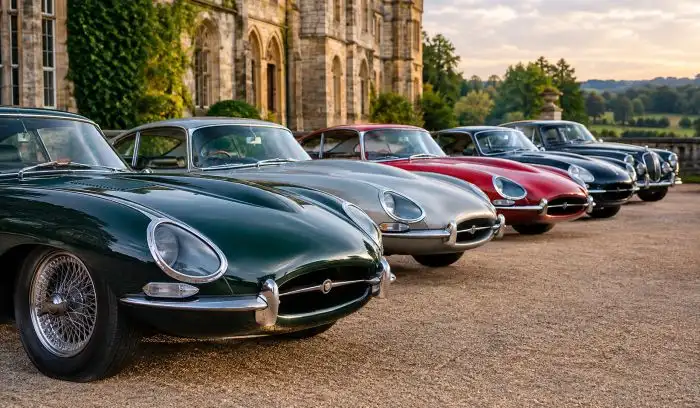
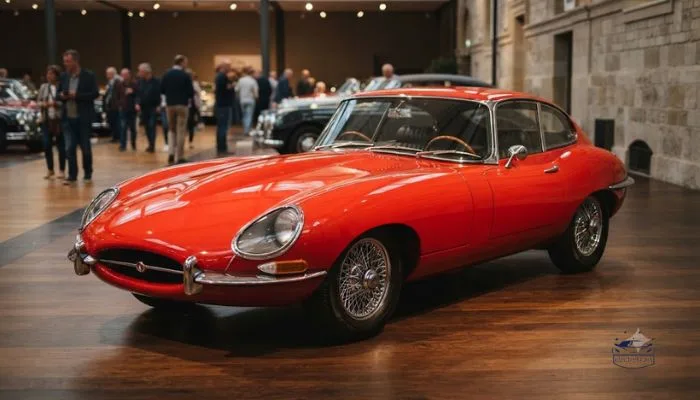
If you could pick one Jaguar model that overshadows all of the rest then it would most definitely be the E-type. Since it launched at the Geneva Motor Show in 1961 (when they had to rush a second car to the show on the back of a transporter to be on the stand!), it has overshadowed just about anything else the company has launched.
With a claimed 150mph top speed and design that makes all previous performance cars look somewhat mundane, and at half the price of anything remotely as glamorous, the E-type turned out to have an illustrious and successful competition history as well as its incredible road-car reputation.
Eventually fitted with larger engines including a 5.3-litre V12 (a 4.2-litre version was also available), and replaced as a competitive performance car by more modern machinery, the E-Type never quite lost its appeal and for this reason every Jaguar since has somehow referenced the model in one form or another.
You May Also Read: What Was the Best Year for a Jaguar Xj?
Jaguar XJ (1968)
If Jag's sporty cars made plenty of headlines for the company, the all-new XJ arguably remains the firm's single most significant model. The company previously produced a vast range of saloons, from the tiny MkII to the enormous MkX and 420G, but with the XJ it swept the board and created a handsome, low-line four-door saloon, which judges quickly recognized as the world's best.
It wasn't joking, either: the XJ's refinement, performance, comfort and handling exist in a different league, and once in 1972 a turbine-smooth V12 engine was installed, anyone else faced a significant challenge. Two further versions of the XJ appeared, stretching through to 1992 with the XJ12, and in later years the car became more refined and dependable than ever.
FAQs
1. What is considered Jaguar's most important model?
The Jaguar E-Type is often regarded as one of the brand's most important and famous models because of its design, performance and lasting influence.
2. Why was the Jaguar XK120 important?
The XK120 helped establish Jaguar as a serious performance-car maker after the Second World War. Its powerful engine, high speed and attractive design made it highly desirable.
3. What made the Jaguar C-Type special?
The C-Type was developed for racing and became famous for its success at the 24 Hours of Le Mans, helping strengthen Jaguar's motorsport reputation.
4. Why is the Jaguar XJ significant?
The XJ became one of Jaguar's most important luxury saloons, combining comfort, performance, handling and elegant styling in one model.
5. Which Jaguar model became famous in films and television?
The Jaguar MkII became particularly recognizable through its many appearances in films and television, often being associated with police cars and villains.